
 Translate
Workforce Wellbeing Exchange Event Praised as the ‘Best One Ever’
Published: 03 June 2026
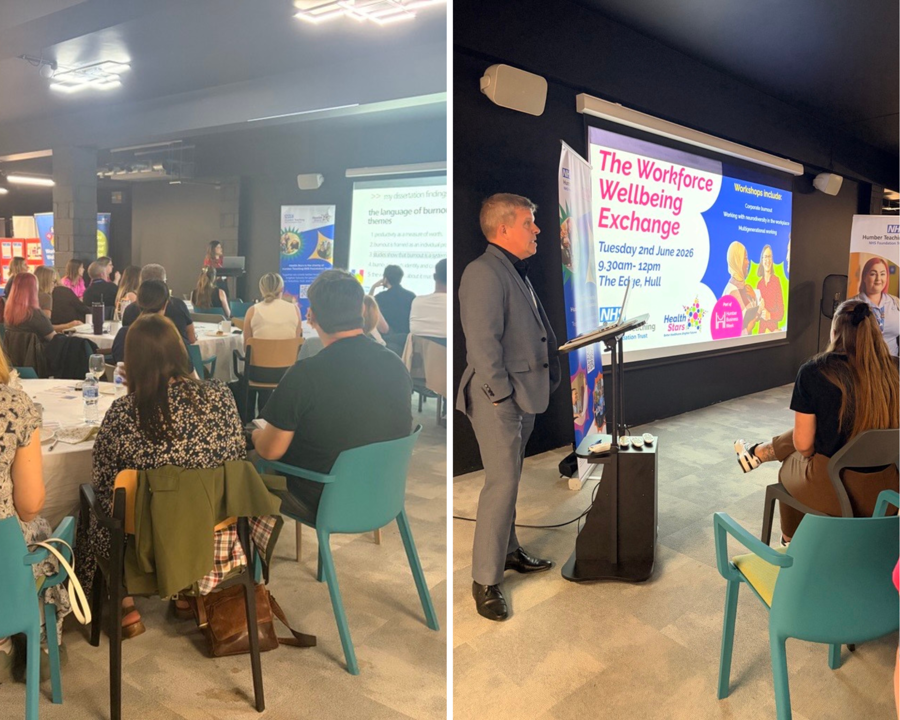
Humber Teaching NHS Foundation Trust and its Charity Health Stars held their first Workforce Wellbeing Exchange as part of Humber Business Week 2026 on Tuesday 2 June. The event brought together representatives from multiple local businesses and organisations looking to learn more about building happier and healthier workforces.
Staff from the Trust’s Neurodiversity service started with a look at how building a more inclusive environment into the workplace can not only better support neurodiverse colleagues but will also positively impact all staff. Clarissa Thompson, Clinical Team Lead at Humber Teaching NHS Foundation Trust shared, “When you create a workplace that works well for your neurodiverse staff, you tend to make it an environment that’s better for everyone”.
She shared the Neurodiversity Toolkit devised by a working group within Humber Teaching NHS Foundation Trust, which included neurodiverse staff members. The toolkit started from Clarissa’s observations as a manager herself, looking into what more could be put into place to facilitate conversations with staff. The outcome is a toolkit that can generates meaningful changes which better support the needs of neurodiverse staff members. Eloise Quayle provided a personal account of her perspectives working for the Trust with neurodiversity, this gave insight into practical ways neurodiverse people can be supported in the workplace. There was also a powerful piece written by another colleague, Megan Salter, which was read out on the day and added an additional layer to what it means to be neurodiverse in the workplace.
With 1 in 7 people now considered to be neurodiverse, workplaces will have many neurodiverse staff members already working with them - whether they are aware or not.
Kati Chambers, Assistant Psychologist at Humber Teaching NHS Foundation Trust, brought her unique insights into how workplaces and individuals can protect against burnout. Her presentation highlighted that 9 out of 10 people experienced symptoms of burnout, with primary causes including excessive workloads, toxic workplaces and feelings of lack of control.
When sharing her slide which stated the common feelings of ‘Too drained to work too guilty to rest’, there were murmurs across the room from attendees who recognised this sentiment in themselves. As part of the session, attendees were asked to partake in 30 seconds of daydreaming which is known to be good for problem solving, and then Kati asked what people thought of during this brief time. One person shared that their mind wandered back to work and the tasks they had not yet completed, highlighting how those in work often struggle to step away from those pressures even when given permission to do so.
The final presentation came from Justin Marjoram, People Experience Manager for Humber Teaching NHS Foundation Trust. Justin shared work that has already taken place within the Trust and continues to identify new and meaningful ways to improve the working environments of its staff. The Multigenerational Project is gaining insights from four age ranges across the Trust by holding focus groups containing one generation at a time to truly understand what their needs and expectations of a workplace are. The outcomes of this piece of work resonated with the attendees, with one commenting that ‘culture and heritage of staff adds additional complexity on top of age”.
Another attendee shared their experience of generational differences within their own workforce which linked back to the earlier conversations around burnout, she said, “Baby boomers can often have a more unhealthy perspective on their own burnout whereas the younger generations are much better at seeing that in themselves early on.”
Reflecting on the event, attendees shared how useful they found each of the sessions. One shared that they work for an organisation that is predominantly male staff, mostly from the Baby Boomer generation and many with neurodiversity. This took advice and understanding away from the insights shared on the day and noted that it will make a real impact on how they operate going forwards.
Another attendee shared that they attend a lot of similar events but have found most are full of corporate and generic ‘one size fits all’ style information, whereas the Workforce Wellbeing Exchange was the ‘best one they have ever been to, and companies could take a lot from it for their people’. This fantastic feedback highlights the need for businesses to learn more about listening to the needs of their staff group and acting on that feedback to make meaningful changes.
Thank you to Health Stars for funding the event. To learn more about the work they do visit their website healthstars.org.uk


